Research & Publications
Publications and academic papers in applied econometrics by Daniel Sánchez Pazmiño, including peer-reviewed articles and graduate course and capstone papers.
Publications and academic papers in applied economics, using econometric methods including causal inference. Each entry is labelled as a peer-reviewed publication or as a course or capstone paper.
Demographic aging and health policy in Ecuador
Peer-reviewed journal article.
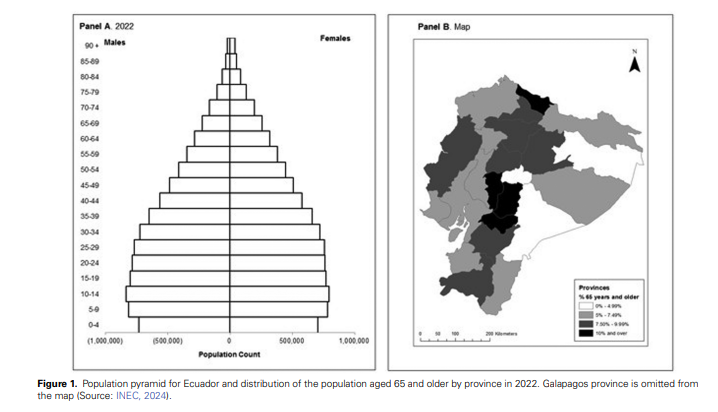
Spotlight paper examining Ecuador’s demographic transition toward an aging society. The article projects that adults aged 65 and over will comprise nearly 18% of the population by 2050, surveys gerontological research gaps, assesses existing datasets, and identifies policy priorities including social security expansion, caregiving infrastructure, and investment in education to leverage the demographic dividend.
Faytong-Haro, M., Quijano-Ruiz, A., Sánchez-Pazmiño, D. H., Salazar-Nicholls, S., Gómez Ayora, A. X., Tipán Jiménez, D., Galarraga, O., & Santos-Lozada, A. R. (2025). Demographic shifts and aging in the middle of the world: health challenges and policy opportunities in Ecuador. The Gerontologist, 65(9), gnaf176.
Do investment tax credits foster innovation? The AITC and patent applications
Capstone paper (not peer-reviewed).
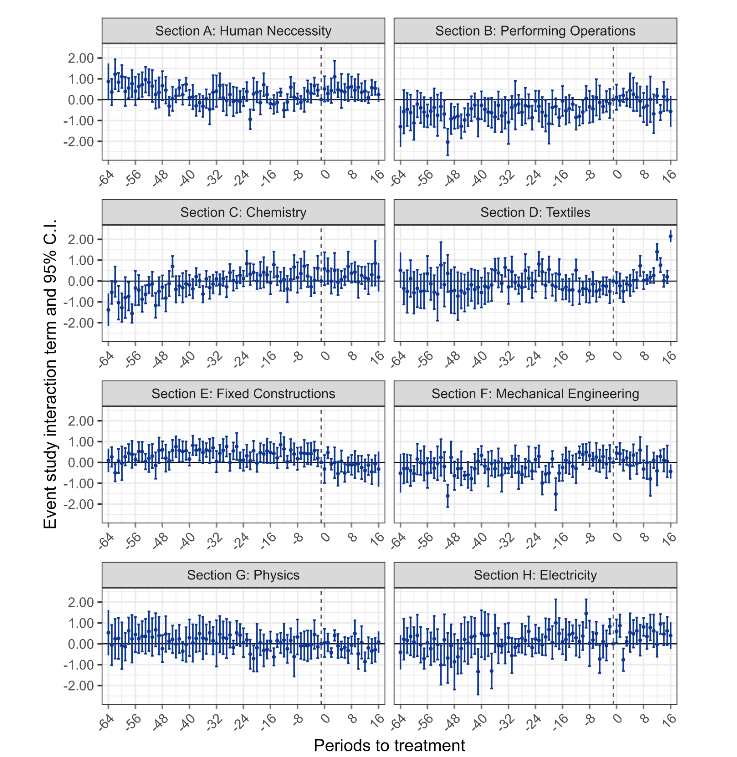
The paper investigates the impact of the Alberta Investor Tax Credit (AITC), a fiscal policy that offered a tax credit for investments in innovative businesses, using a two-way fixed effects difference-in-differences estimator. Estimates show that after the AITC implementation, patent applications from Albertan parties increased for human necessity and textile inventions, yet decreased for fixed construction patent applications, producing a total null effect on patent applications overall.
Sánchez Pazmiño, D. H. (2024). Do investment tax credits foster innovation? The Alberta Investor Tax Credit and patent applications. MA Economics Capstone Paper, Simon Fraser University.
Retrospectively sweaty? Temperature changes and presidential approval
Course research paper (not peer-reviewed).
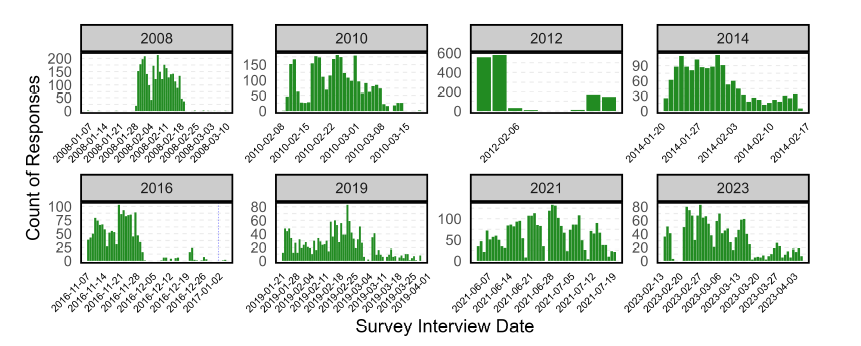
The paper contributes to the retrospective voting literature by examining whether seemingly irrelevant events, specifically short-term daily temperature changes, affect presidential approval ratings in Ecuador. Using daily CPC Global Unified temperature data matched with AmericasBarometer survey responses, the analysis finds that higher temperatures have a negative and statistically significant relationship with presidential approval, suggesting voters commit attribution errors consistent with mood misattribution.
Sánchez Pazmiño, D. H. (2024). Retrospectively sweaty? The effects of temperature changes on presidential approval. POL837 Issues in Comparative Politics Research Paper, Simon Fraser University.
Entry regulation and formal employment in Ecuador
Course policy project (not peer-reviewed).
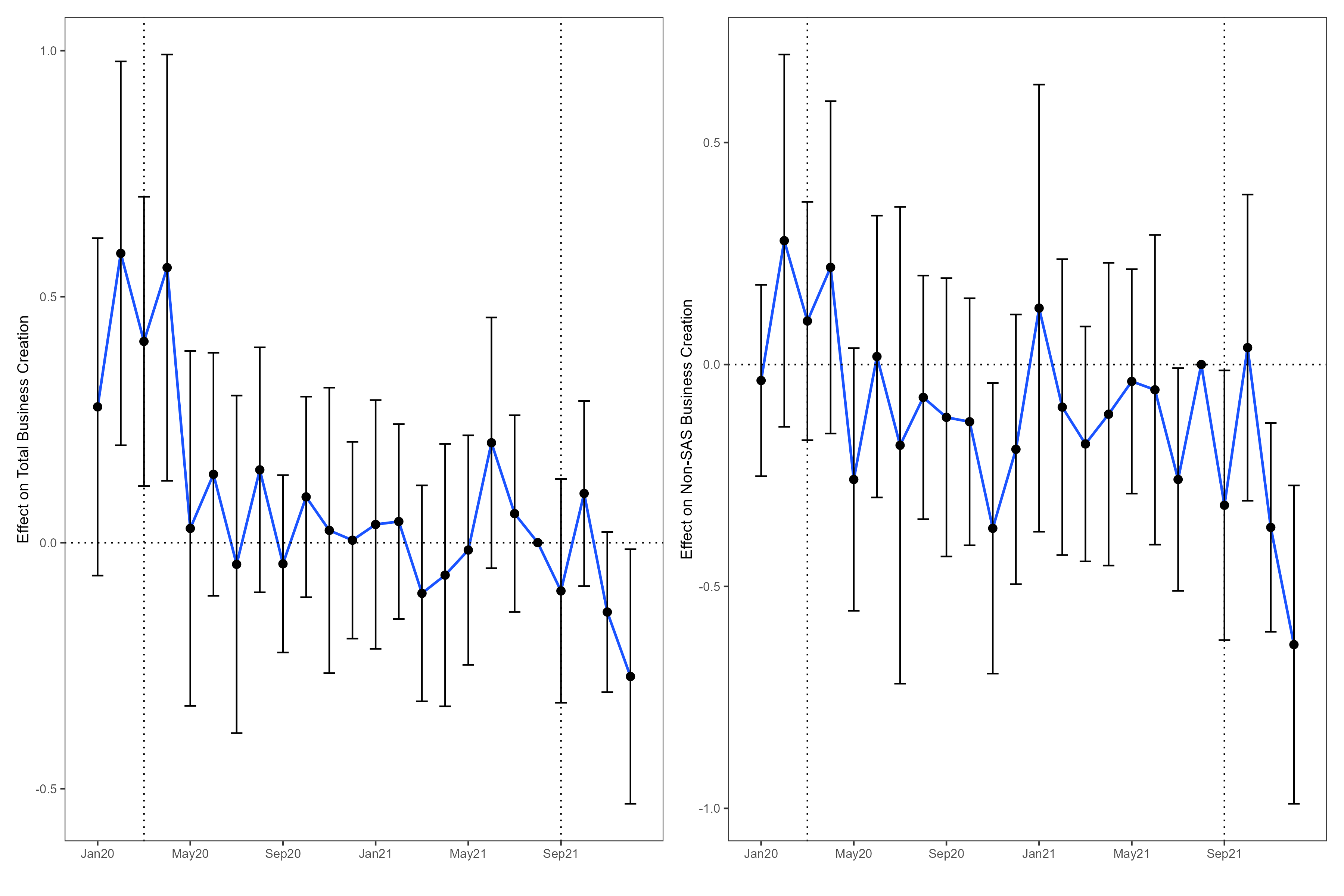
The paper explores the effect of a business entry cost deregulation reform in Ecuador (May 2020) on formal employment, using an event-study approach grounded in the theoretical framework of Branstetter et al. (2014). The empirical analysis yields mixed results, though significant evidence supports the fit of the theoretical model with the data, suggesting that a sufficiently large reduction in fixed entry costs for firms can generate formal employment.
Sánchez Pazmiño, D. H. (2023). The influence of entry regulation on formal employment. ECON807 Macroeconomic Theory & Policy Project, Simon Fraser University.
Differences-in-differences with COVID-19 administrative data in Ecuador
Journal article.
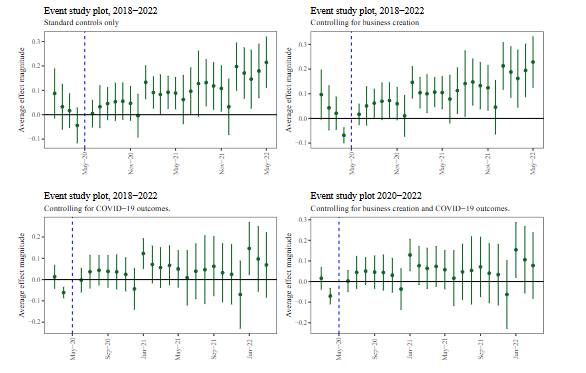
The paper used a two-way fixed effects differences-in-differences estimator to estimate the causal effect of COVID-19 vaccination on business creation in Ecuadorian provinces. The key result was that provinces which showed apparent reluctancy to vaccinate saw about 25% less business creation than provinces that didn’t.
- Link to full paper 1
- Code available on request
Sánchez Pazmiño, D. H. (2022). Immunizing the Economy: A Causality Discussion on Vaccines and Economic Recovery. X-Pedientes Económicos, 6(14), 65–82.
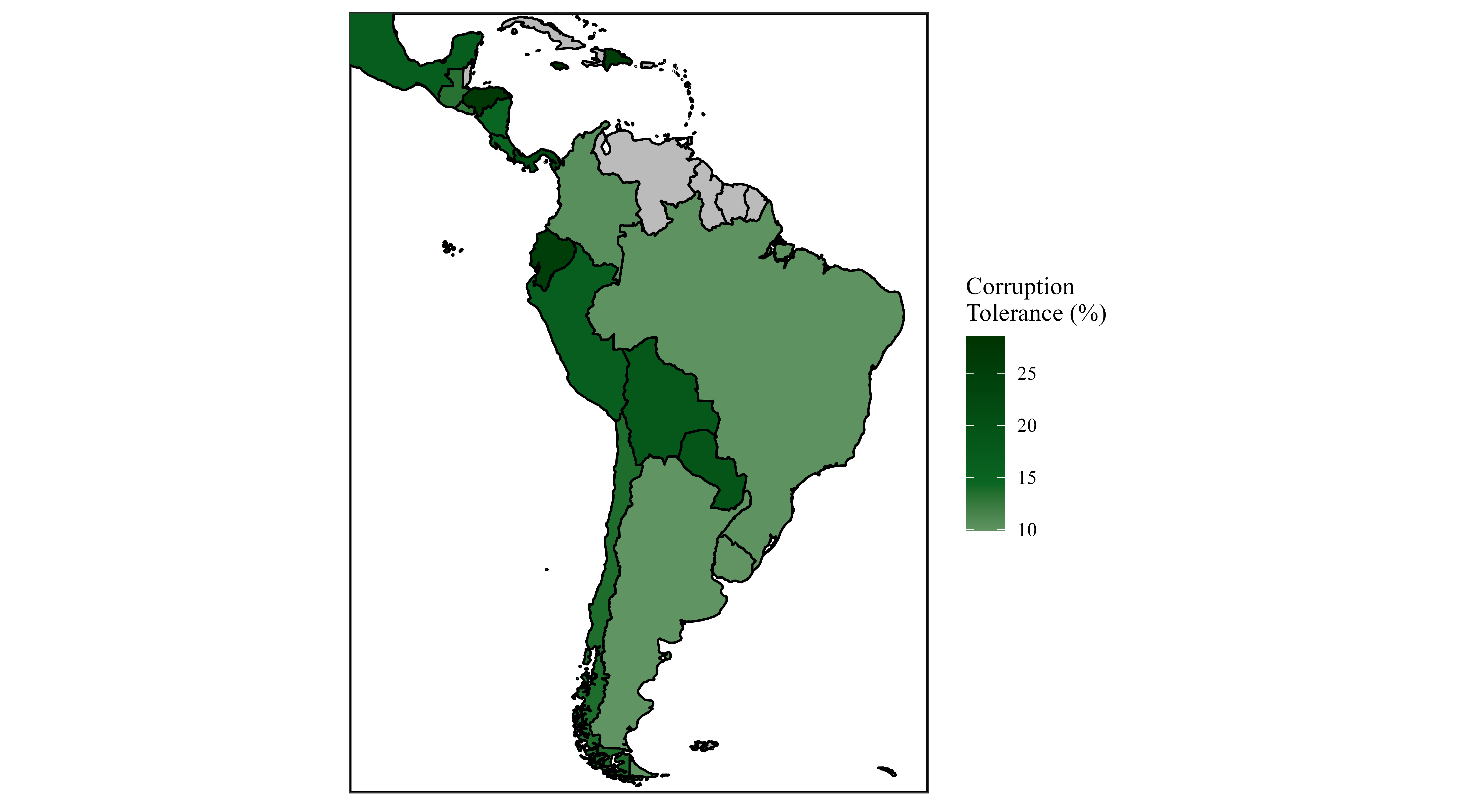
Survey-weighted logistic regression to investigate corruption at the individual level
Peer-reviewed journal article.
Published in Virginia Tech’s peer-reviewed journal, The Philosophy, Politics, and Economics Review. I use survey-weighted logistic regression to investigate the drivers of a mysterious increase in corruption tolerance in Ecuador between 2014 and 2016, finding that political identification and presidential approval drove the change.